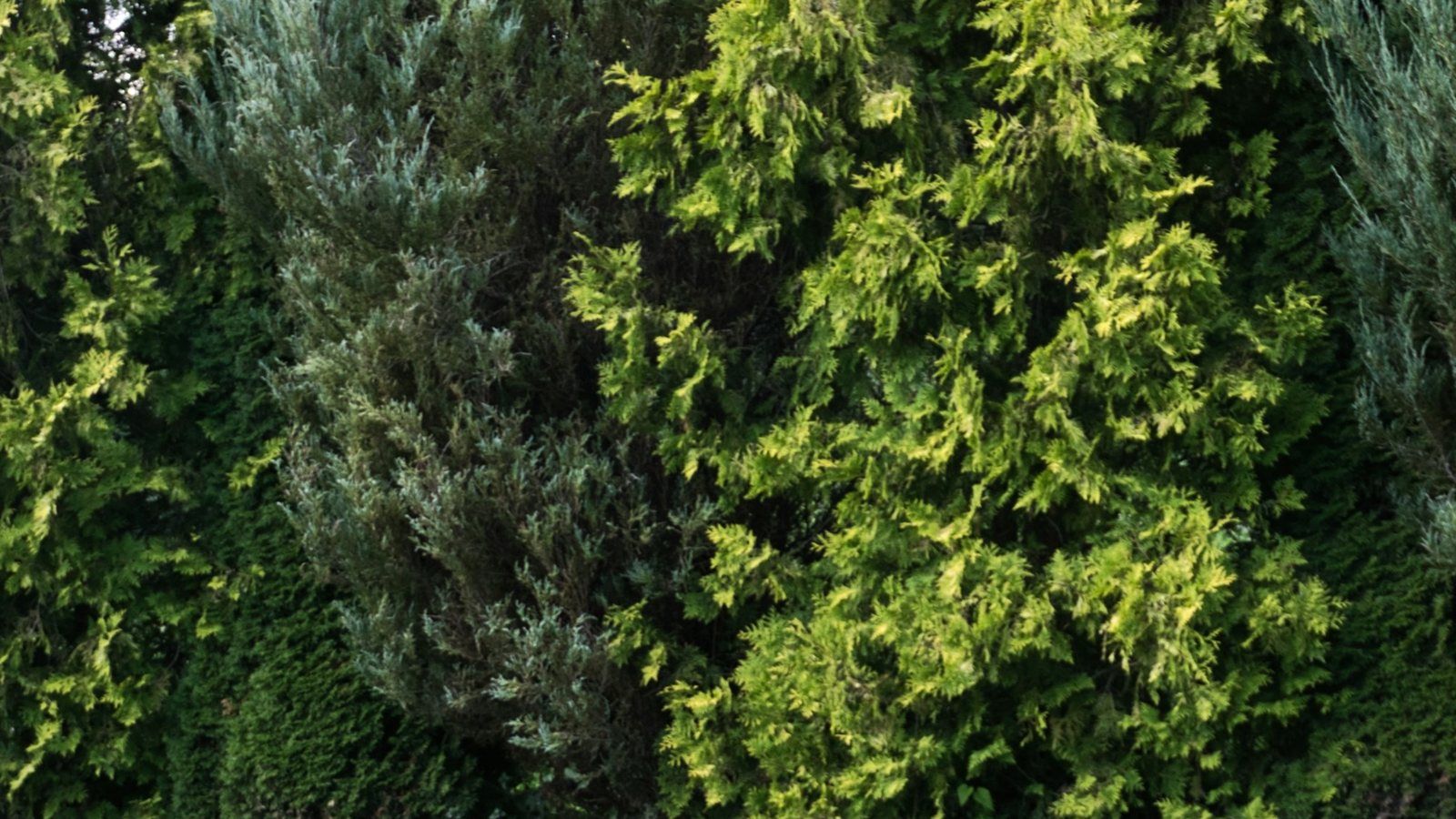
Arborvitae is the default privacy screen in Greater Cincinnati. Drive through any subdivision in Mason, Loveland or Anderson Township and you will see the same long green rows along the back property lines, planted to block a neighbour’s deck or a road. They do the job well for years, and then one winter a homeowner looks out in February and the bottom half of the row is brown sticks.
That call comes in every year, usually in late winter, and usually from someone who is about to find out the hard part. The damage is not the sort that grows out.
Why deer go after arborvitae in winter
Deer eat what is available. From spring through fall there is plenty, and a row of arborvitae is one option among hundreds. By December the picture is completely different. The perennials have died back, the leaves are down, the field edges are bare, and the soft green wall along your property line is one of the few things left standing with any nutrition in it.
Arborvitae also happens to be palatable. The foliage is soft and flat rather than stiff and needled, so it is easy to strip. Compare that to a blue spruce, which deer will generally walk past all winter. We see the preference play out plainly on mixed screens: the arborvitae gets worked over while the spruce two feet away is untouched.
Then there is how it is planted. Arborvitae goes in as a long unbroken row, usually at the back of a property where the yard meets a wood line or a field. That is exactly where deer are already travelling, and a continuous hedge means a feeding animal never has to move far. It is the most convenient food source on the property.
What a browse line is, and why it is permanent
Walk a damaged screen and the pattern is unmistakable. Everything above roughly five or six feet is full and green. Everything below it is stripped back to bare stems. That height is simply how far a white-tailed deer can comfortably reach, and in deep snow they reach higher, because they are standing on it.
Here is the part homeowners do not expect, and the reason we treat arborvitae differently from almost everything else we protect.
Most shrubs recover from browsing. A hosta comes back the following spring. A hydrangea leafs out from lower buds. Arborvitae does not work that way. It does not reliably produce new shoots from old brown interior wood, because it does not carry dormant buds there. Once the green foliage on a section is eaten back past the live growth, that section has nothing left to grow from. It stays bare.
So a winter of heavy browsing does not cost you a season. It costs you the screen. The plants are alive, they keep growing at the top, and the gap at eye level never closes. The usual options after that are replacement or living with it, and replacement means starting over with small plants in the same spot where the deer already know to feed.
That is the whole argument for getting ahead of it. On most plants, protection buys you a better season. On arborvitae it protects something that cannot be rebuilt.
When the pressure starts, and when to start protecting
The heavy browsing season in Clermont, Hamilton and Warren counties runs from roughly November through March. It builds as natural forage runs out, usually peaks in the hardest stretch of winter, and eases when green growth returns in spring.
Protection needs to be in place before that window opens, not after. Waiting until you can see a browse line means the growth is already gone and no treatment brings it back. Starting in late fall, before the first hard freeze, is what keeps the screen intact.
Winter is also the season where an application schedule matters most. Rain, melting snow and new growth all reduce coverage over time, which is why this is recurring work rather than a one-time spray. Our deer control service is built around that reality, on a schedule rather than a single visit, using the same professional deer repellent we apply to foundation shrubs and beds. Results still vary with deer pressure, weather, plant growth and how consistently the schedule is kept.
Something worth knowing if you are new to this: a mild winter does not mean a safe one. Deer pressure is driven by how many animals are using your property and what else is available nearby, and a new housing development or a cleared field a quarter mile away can change your yard’s situation in a single season even when the weather is easy.
What this looks like on larger properties
For a homeowner with a privacy screen along the back lot line, this is the core of our residential deer control work: a winter schedule on the evergreens, with the flower beds and shrubs added in spring.
Arborvitae is not only a homeowner problem. HOA common areas, office parks and apartment communities around Cincinnati use the same plant for the same reason, usually in much longer runs along entrances and perimeters.
The economics are different at that scale. A homeowner who loses the bottom of six plants has an unpleasant spring. A property manager who loses the bottom of two hundred along an entrance drive has a capital expense and a board asking questions. We handle those as commercial property protection, and the winter schedule is the part that carries the most weight, because that is the season when the loss is permanent.
Farms and rural properties have a third version of this, where screens and windbreaks sit directly against the pressure. That work is covered under rural and farm protection.
What to do before winter sets in
A few things are worth doing yourself, whether or not you bring anyone in.
- Walk the row now and look at the bottom three feet. Thin, stripped stems you can see through tell you the pressure is already there and last winter did damage you have not registered yet.
- Note which plants are hit and which are not. Uneven damage across a mixed screen tells you where the deer are entering and which direction they travel.
- Check what is new nearby. Construction, clearing, or a neighbour removing a fence changes deer movement, and the yard that was fine for ten years is not guaranteed to stay that way.
- Decide before the freeze. Everything is easier to arrange in October than in January, and the protection only helps if it is in place before the browsing starts.
If you want somebody to look at it, we walk the property, work out where the pressure is coming from and tell you plainly what is at risk. You can request a free property estimate or see whether your town is on our service area list.
The short version: the bottom of an arborvitae screen is the one part of a yard where a single winter of browsing does not grow back. That makes it worth getting to before November, rather than looking at it in February.
Frequently Asked Questions
Will my arborvitae grow back after deer eat it?
The top and outer growth will keep going, but bare interior wood generally will not releaf. Arborvitae does not have dormant buds in old brown wood the way a boxwood or a yew does, so a section browsed back past the green foliage usually stays bare. That is why protecting it beforehand matters more than it does on plants that regrow.
Why do deer eat arborvitae in winter but leave it alone in summer?
In summer they have easy options everywhere. Once the leaves drop and the garden dies back, a soft evergreen standing at head height is one of the few green things left. Arborvitae is palatable, it holds its foliage all winter and it is planted in long rows along property lines, which makes it an easy meal.
When should I start protecting arborvitae in Greater Cincinnati?
Before the first hard freeze, generally in late fall rather than after you see damage. Deer pressure builds through the season, and by the time a browse line is visible the growth it removed is already gone for good. Starting early is the difference between a screen that holds and one you replace.
Do deer eat other evergreens the same way?
Not equally. Around here arborvitae takes the heaviest pressure, with yew close behind. Spruce and most junipers are usually passed over because the foliage is stiff and resinous. A mixed screen does get browsed unevenly, which is often the first clue about what is really happening along a property line.
Is the repellent safe around my kids and dog?
The repellent we apply is safe for people, pets, and plants when used as directed. Keep people and pets away from treated areas until dry.
Header photo by Marek Poniedzialek on Unsplash