Every few weeks somebody in Loveland or Anderson Township asks us a version of the same question. They have lost the hostas again, or the arborvitae along the drive is bare on one side, and they want to know whether they should just build a fence and be done with it.
It is a fair question, and the honest answer is that sometimes they should. A fence does something our service does not do, and pretending otherwise would be a poor way to run a business that depends on people trusting what we tell them. So here is the real comparison, including the cases where we are the wrong call.
Fencing physically excludes deer from an area. Repellent makes the plants inside an area taste and smell wrong, so deer move on without eating them. Fencing is the better choice for a small, enclosable, high value space. Repellent is the better choice for an open ornamental landscape that cannot be enclosed, which describes most Cincinnati area yards.
Does a fence actually keep deer out?
A properly built deer fence does, and it is the only method that genuinely excludes them. Extension guidance from university wildlife programs puts a conventional vertical woven wire fence at about eight feet, with electric designs effective lower, and the bottom kept tight to the ground so deer cannot go under.
This is the part worth saying plainly. A real deer fence works. Penn State Extension lists eight feet for woven wire and five to seven feet for electric designs, and the University of Minnesota sets the same eight foot floor for protecting a larger area. Built to that spec and maintained, a fence is not a deterrent you reapply. It is a wall.
The catch is in the word properly. Deer go under and through fences at least as often as they go over them, so a line that sags, that crosses a ditch, or that has a six inch gap where the ground dips is a fence with a door in it. A fence line through a wood line also takes a limb eventually. None of that is a reason to avoid fencing. It is a reason to be realistic about what you are signing up for.
Where is fencing genuinely the better choice?
Fencing is better whenever the area is small, clearly bounded and worth enclosing: a vegetable garden, a cutting bed, a young orchard, or a block of newly planted trees on acreage. Exclusion is permanent protection for that space and needs no schedule once it is built correctly.
If what you are losing is a vegetable plot, build the fence. We will tell you that on the phone. A twenty by thirty garden is a defined rectangle, it is usually in the back, and a tall wire enclosure around it solves the problem for as long as the fence stands. Spending on a recurring service to protect green beans does not make sense when a one time build does it better.
The same logic holds out on rural ground. Young fruit trees, a new windbreak, a nursery block, a field planting of seedlings: those are concentrated, high value, and the browsing pressure on them is constant. We work with farm and acreage owners on rural and farm protection, and on plenty of those properties the right plan includes fencing the highest value block and treating everything outside it.
It also matters that a fence is not seasonal. Our work runs on a rotation through the year. A fence works at two in the morning in February without anybody scheduling anything.
Why does fencing fall short on a typical Cincinnati yard?
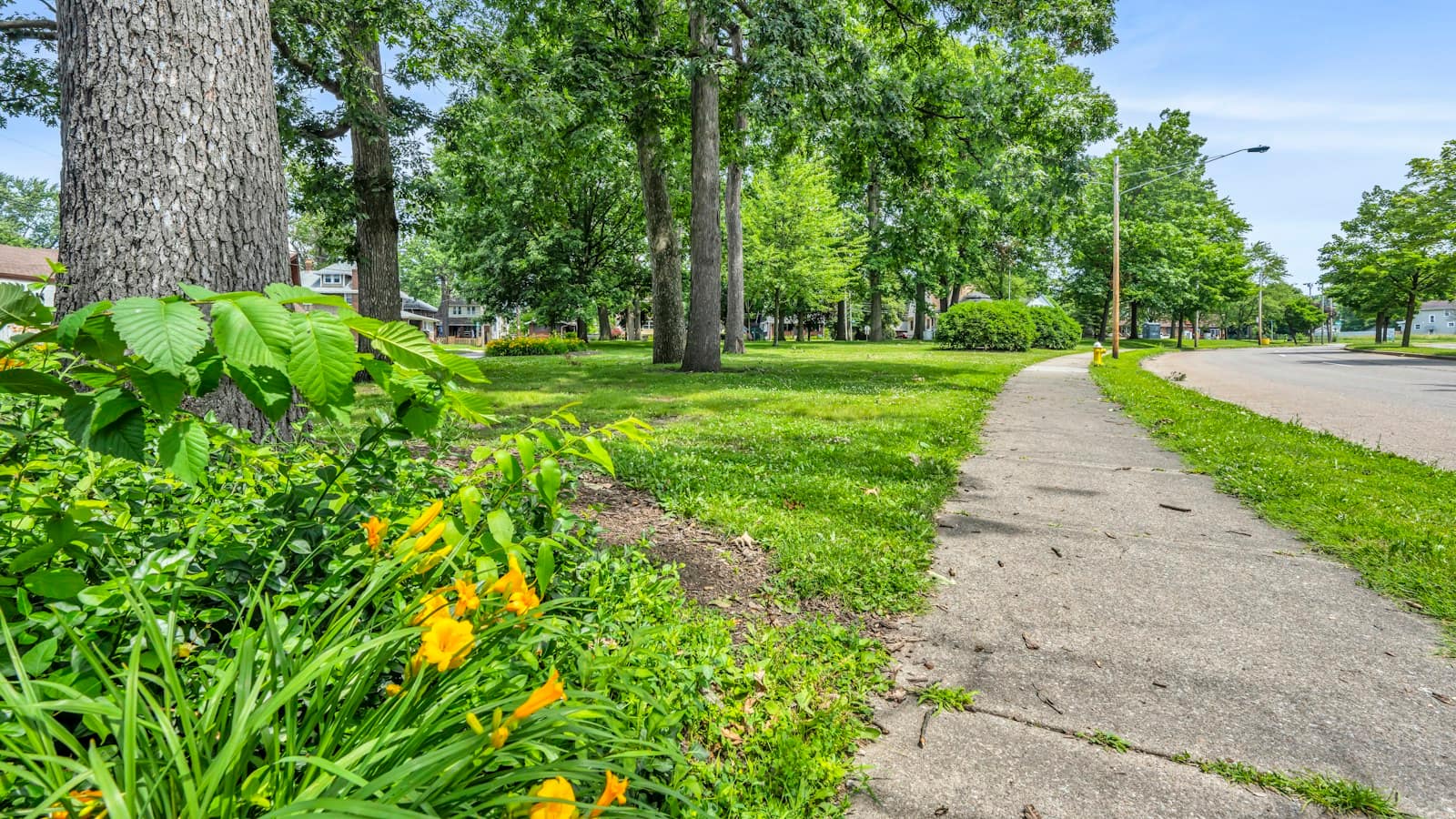
Because the plants most homeowners lose are not in a fenceable space. Foundation shrubs at the front door, the hosta bed by the porch, the arborvitae screen along the drive and the hydrangeas at the corner of the house sit where no eight foot fence is going up, and most residential zoning and HOA rules would not allow one there anyway.
Walk the average subdivision lot in Mason, Milford or Montgomery and look at where the damage actually is. It is almost never in a tidy enclosed rectangle. It is the front landscape, the side bed, the line of evergreens screening the neighbor, the planting around the mailbox.
To exclude deer from those, you would be fencing the house itself, eight feet high, across the front yard. Local fence codes set height and placement, and in a front or side yard they commonly allow less than a deer fence needs. Add an HOA covenant and the conversation is usually over before it starts.
Then there is the gate problem. A perimeter fence around a whole lot still has a driveway, a walk and a side gate. Deer learn an open gate fast, and one left open at dusk is the entire fence for that night. On a larger property there is also the awkward case of the deer that were already inside when the last section went up.
And some people simply do not want to look at it. A yard that was landscaped to be open does not stay open with wire around it.
What does repellent do that a fence cannot?
It protects specific plants wherever they are, including the front of the house, with nothing built and no approval needed. The plants stay visible and the yard stays open. Coverage can also move as the landscape changes, so a new install in June is protected the week it goes in.
Our deer repellent service treats the plants rather than the perimeter. That is the whole difference. We walk the property, work out where the deer come from and what they are hitting, and treat those plants on a rotation through the seasons when pressure is highest.
Nothing gets built. Nothing needs a variance or a board vote. The front landscape you paid for stays a front landscape. For most homeowners asking us this question, that is the deciding factor, because the plants they care about are in exactly the spots a fence cannot go.
It also adapts. Put in six new hydrangeas in May and they go on the plan immediately, which matters, because fresh nursery stock is the most attractive thing on most properties. A fence protects a space, and the space does not change. Residential deer control protects plants, and plants change constantly.
For the mechanics of how a treatment works on the plant and why reapplication is part of it, our post on whether deer repellents actually work goes through it in detail.
Where does repellent fall short?
It is a deterrent, not a barrier. Deer are still on the property, and under heavy late winter pressure they will eat things they normally pass by. New growth is unprotected until it is treated, and results vary with deer pressure, weather, plant growth and application schedule.
We do not promise to remove deer. We are a deterrent and landscape deer protection service, not an exterminator or a wildlife removal company, and anyone telling you a spray ends your deer problem permanently is selling you something that does not exist.
The real limits are worth knowing before you hire anyone. Deer that are hungry enough will test treated plants, particularly in late winter when natural food is gone. Plants push new growth that has not been treated yet, which is why the schedule tracks growth rather than the calendar. Heavy rain and new flush both affect how long an application holds.
Choosing plants deer dislike helps alongside treatment, though resistant has never meant untouched. Our guide to deer resistant plants for Cincinnati gardens covers which ones hold up here and where that approach runs out.
Which one should you choose for your property?
Fence a small, enclosable, high value area such as a vegetable garden or a young orchard. Use scheduled repellent for an open ornamental landscape, front plantings and anything a fence cannot legally or practically surround. Many properties are best served by doing both.
Three quick questions sort most of it out.
- Can the area actually be enclosed? If it is a bounded rectangle in the back, a fence is likely the better spend. If the damage is spread across the front and sides of the house, it is not.
- Will height and placement be allowed? Check your municipality or township and your HOA before anything else. A six foot compromise fence buys very little against deer.
- Is what you are protecting fixed or changing? A permanent planting suits a permanent barrier. A landscape that gets added to every season suits a program that can follow it.
Plenty of properties land on both. The garden gets fenced, the ornamental beds go on a schedule, and the two together cost less than replanting the same shrubs every year.
Getting a straight answer for your yard
If a fence is the right answer for your situation, we will say so, because sending somebody a proposal for work they do not need is not a business worth running.
We protect landscapes across Greater Cincinnati, Southwest Ohio and Northern Kentucky, including Loveland, Milford, Mason, Batavia, Anderson Township, Indian Hill, Montgomery and Blue Ash, and the surrounding Clermont, Hamilton and Warren county communities. Deer are not the only thing working on a yard either, and rabbit repellent covers the damage lower down.
Request a free property estimate and we will walk the site, tell you where the pressure is coming from, and give you a straight read on whether a fence, a program, or both is the right call.
Frequently Asked Questions
How tall does a deer fence have to be?
Extension guidance from university wildlife programs puts a conventional vertical woven wire deer fence at about eight feet for a larger area, with electric designs working lower, in the five to seven foot range. Small enclosures around a single bed can sometimes work shorter, because deer avoid jumping into a space that looks too tight to land in. Height is only half of it. The bottom has to sit tight to the ground, because plenty of deer go under rather than over.
Will the privacy fence I already have stop deer?
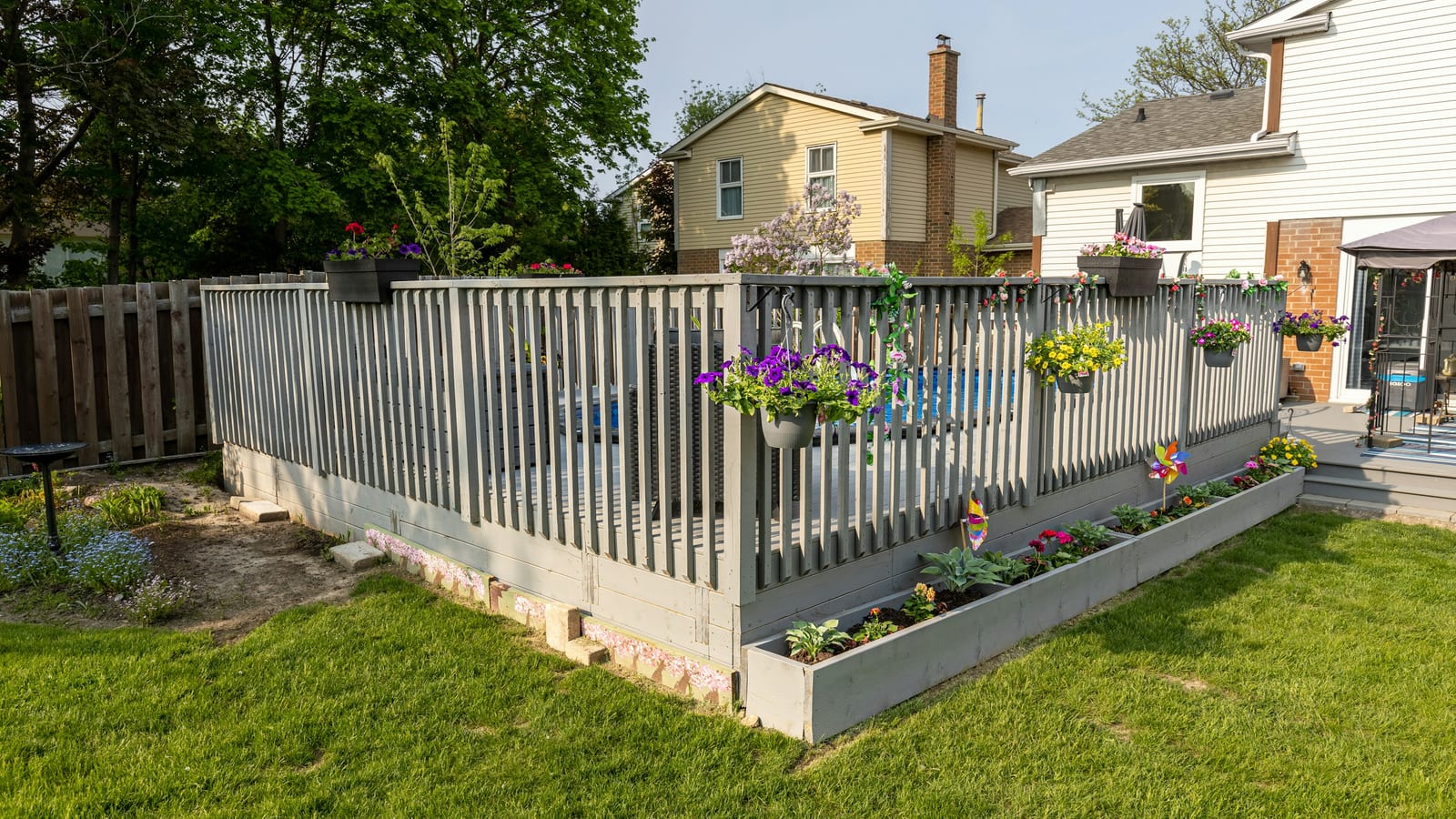
Usually not on its own. Most residential privacy and pool fences around here run four to six feet, which a healthy whitetail clears without much effort when there is something worth crossing for. A solid privacy fence does help a little, because deer are cautious about jumping into ground they cannot see. It is a mild discouragement rather than exclusion, and it does nothing for everything planted outside it.
Can I use repellent and a fence together?
That is often the right answer, and it is what we see on properties that have stopped losing plants. The fence goes around the one area worth enclosing, usually the vegetable garden, and the ornamental beds, foundation shrubs and front plantings that cannot be fenced go on a scheduled repellent program. Each tool covers what the other cannot.
Do I need a permit or HOA approval for a deer fence in Greater Cincinnati?
Check before you buy materials. Fence height, setback and placement are set by your municipality or township, and many residential codes allow less height than an effective deer fence needs, particularly in a front or side yard. HOA covenants frequently add their own limits. Rural and agricultural parcels usually have far more room to work with than a platted subdivision lot.
Is repellent safe around my family and pets?
The repellent we apply is safe for people, pets, and plants when used as directed. Keep people and pets away from treated areas until dry. We time applications with you so a yard that gets used is not being walked on while it dries.
Header photo by Proper Construction on Unsplash