There are two plants that come up in almost every estimate we walk around Loveland, Mason and Anderson Township: hostas and hydrangeas. They are in half the foundation beds in Greater Cincinnati, they are both on the short list of things deer will cross a yard for, and they need to be protected at completely different times of year.
That last part is what most homeowners miss. A plan that keeps hostas whole will do almost nothing for a hydrangea, and the reason has more to do with when each plant builds the thing you care about than with how much the deer like it.
Why do deer go after hostas and hydrangeas?
Both plants offer soft, high moisture foliage with none of the fuzz, thorns or strong oils that make deer move on. Hostas sit at easy browsing height in shaded beds near the house, and hydrangeas hold tender stem tips that stay attractive well after other plants have hardened off for the year.
Rutgers Cooperative Extension rates hundreds of landscape plants on a scale from rarely damaged to frequently severely damaged in its deer resistance ratings, and the point the list makes clearly is that no plant is fully protected. Under enough pressure deer will eat things they normally ignore. Hostas and hydrangeas are not on the edge of that list. They are squarely in the group deer seek out first.
We covered the plant selection side of this in our guide to deer resistant plants for Cincinnati gardens. The short version: choosing better plants helps, and it is not a substitute for protecting the ones you already have and want to keep.
When should you start protecting hostas in spring?
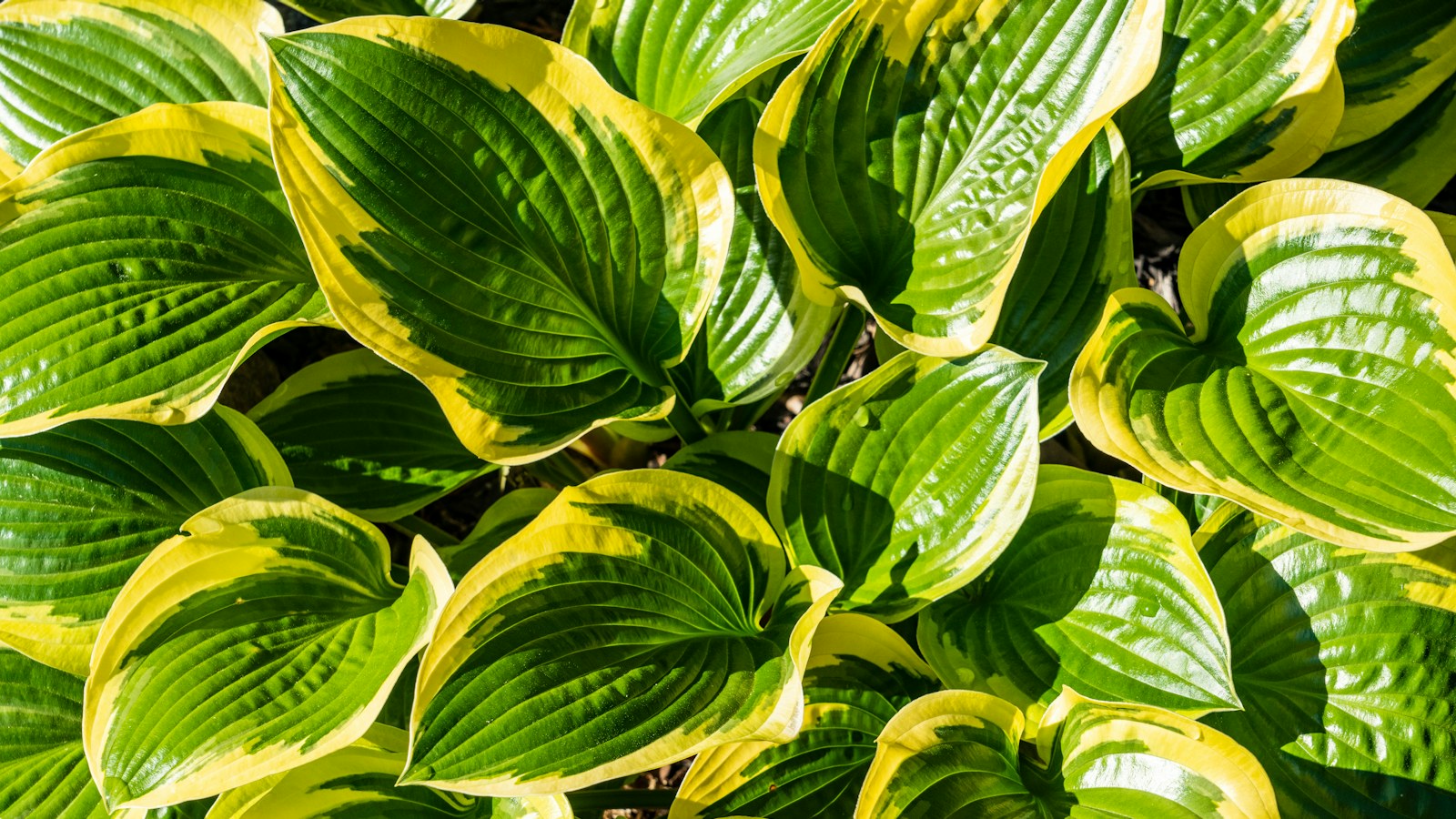
Start when the shoots first break the mulch, typically late March into April in Greater Cincinnati. Hostas produce most of their leaves in a single spring flush, so a bed eaten at the shoot stage stays sparse for the rest of the season rather than growing back the way an annual would.
This is the single most useful thing to know about hostas. They are not like a perennial that keeps pushing new growth all summer. The crown sends up its leaves early, and that is largely what you get for the year. Deer take a bed of six inch shoots in one evening in April, and the homeowner spends May through September looking at stubs.
By the time somebody calls us in June because the hostas look terrible, the honest answer is that this season is mostly decided and the work now is protecting whatever is left and getting ahead of next spring. Nobody enjoys hearing that. It is why we would rather be out there in March.
Treatment at the shoot stage is quick, because there is very little plant to cover. As the leaves expand, the new surface coming in is untreated, which is the reason our deer repellent service runs on a schedule instead of a single visit. Spring is when plants change fastest, so it is also when the interval between applications matters most.
How do you keep hostas protected through the summer?
Keep coverage current as the plant grows and after heavy rain. Hostas expand quickly through May and June, and every new leaf that opens after a treatment is unprotected until the next one. Consistent intervals matter more in summer than the strength of any one application.
Summer is mostly a maintenance problem. The bed is full, the leaves are large, and deer pressure in most neighborhoods eases a little because there is more to eat everywhere else. That is exactly when people are tempted to stop, and then a dry August pushes deer back into irrigated landscaping and the bed gets hit in a week.
One practical note from the field: hostas planted in the open lawn islands get browsed harder than the ones tucked against the house. Deer are more comfortable feeding with an escape route. If you have a bed that keeps getting hit while an identical bed twenty feet away does not, that is usually why, and it tells us where to concentrate.
What changes for hydrangeas in fall and winter?
Deer shift to woody stems and buds as soft growth disappears. On bigleaf hydrangeas that is expensive, because next summer's flower buds are already sitting on this year's stems. Browsing the stem tips over winter removes the blooms before the plant ever wakes up.
Here is the part almost nobody connects. Bigleaf hydrangeas, the mophead and lacecap types most people picture, set their flower buds at the tips of the previous year’s stems. University of New Hampshire Extension puts it plainly in its guidance on pruning hydrangeas: those buds form on old wood, and if they are damaged the following season’s flowering is reduced.
Deer do not know any of that. They browse the stem tips in January because the tips are what is available. In May the shrub leafs out from lower buds and looks perfectly healthy. In July it does not bloom, and the homeowner assumes they pruned it wrong, or blames the weather, or buys fertilizer.
Panicle and smooth hydrangeas, including the big white Annabelle types, bloom on new wood. Those recover their flowers in the same season because the buds form on growth that has not happened yet. So the winter risk is real for one group of hydrangeas and minor for another, and knowing which ones you have changes what your plan needs to cover.
If you are not sure which type is in your bed, the quickest tell is bloom timing and color. Mopheads that bloom blue or pink in early summer are almost always bigleaf, and those are the ones worth protecting through winter.
Will hostas and hydrangeas come back after deer eat them?
Both usually survive, but recovery is not the same as no damage. Hostas regrow from the crown next spring rather than refilling the current season. Hydrangeas leaf out again, and a browsed bigleaf may skip a full year of blooms. Repeated browsing over several seasons weakens both.
We say this on every estimate because it is the honest framing. A single bad year rarely kills a healthy hosta or an established hydrangea. What does real damage is the same bed getting eaten three springs running, which thins the crowns and leaves you replanting.
That is also the argument for treating before you see damage rather than after. The plant is not the only thing at stake. It is the season.
What does a year round plan actually look like?
Coverage starts at first growth in early spring, runs on consistent intervals through the growing season as plants expand, and continues into late fall and winter on the woody plants deer turn to when soft growth is gone. The schedule shifts with the plants rather than with the calendar alone.
On a typical residential deer control property with a shaded hosta border and hydrangeas along the front of the house, that means we are treating low and early in spring for the hostas, keeping intervals tight while the beds fill in, and staying on the hydrangea stems into the cold months when nothing else is green.
A few honest limits, because we would rather set expectations than oversell:
- Repellent protects the growth it is applied to. New leaves and new stems are unprotected until the next application.
- Heavy rain, rapid growth and very high deer pressure all shorten how long a treatment holds. Results vary with deer pressure, weather, plant growth and application schedule.
- For a small, high value planting, fine mesh fencing through the worst months is a reasonable option on its own or alongside treatment.
- We are a deterrent and landscape deer protection service. We are not removing or harming deer, and no treatment makes a property permanently uninteresting to them.
HOA common areas and commercial landscapes run on the same logic, just at a scale where the hosta borders and hydrangea plantings are usually the first thing a board notices when they go missing.
Ready to stop replanting the same beds?
Have someone walk the property and identify which plants are getting hit, at what height, and which hydrangeas you actually have. That walk is what sets the treatment schedule, and it takes a few minutes. It is the first thing we do on every estimate.
If your hostas came up thin this year, or a hydrangea leafed out and never bloomed, those are two different problems with two different fixes, and both are solvable before next season. We protect properties across Cincinnati, Batavia, Milford, Loveland, Mason and Northern Kentucky, and you can see the full list on our service areas page.
Request a free property estimate and we will show you what is eating your landscaping and how we would protect it.
Frequently Asked Questions
Will deer eat hostas even if I plant something they dislike nearby?
Usually yes. Deer browse selectively within a bed, so a hosta sitting next to an aromatic perennial still gets eaten. Companion planting changes the look of a bed more than it changes what a hungry deer picks out of it.
My hydrangea leafed out but never bloomed. Could deer be the reason?
On a bigleaf hydrangea, yes, that is a common cause. Those flower buds form on last year's stems, so deer browsing the stem tips over winter takes the blooms with them. The plant still leafs out from lower buds in spring, which is why the damage goes unnoticed until June.
When should I start protecting hostas in Greater Cincinnati?
As the shoots push through the mulch, usually late March into April depending on the spring. Waiting until you see damage means the flush of leaves is already gone for that season.
Do I need treatment all year, or only in certain seasons?
It depends on what you are protecting. Hostas need coverage from first growth through the end of the season. Hydrangeas need attention into late fall and winter, when deer turn to woody stems and buds. A schedule built around both is what keeps a mixed bed intact.
Is the repellent safe around my kids and dog?
The repellent we apply is safe for people, pets, and plants when used as directed. Keep people and pets away from treated areas until dry.
Header photo by chris robert on Unsplash